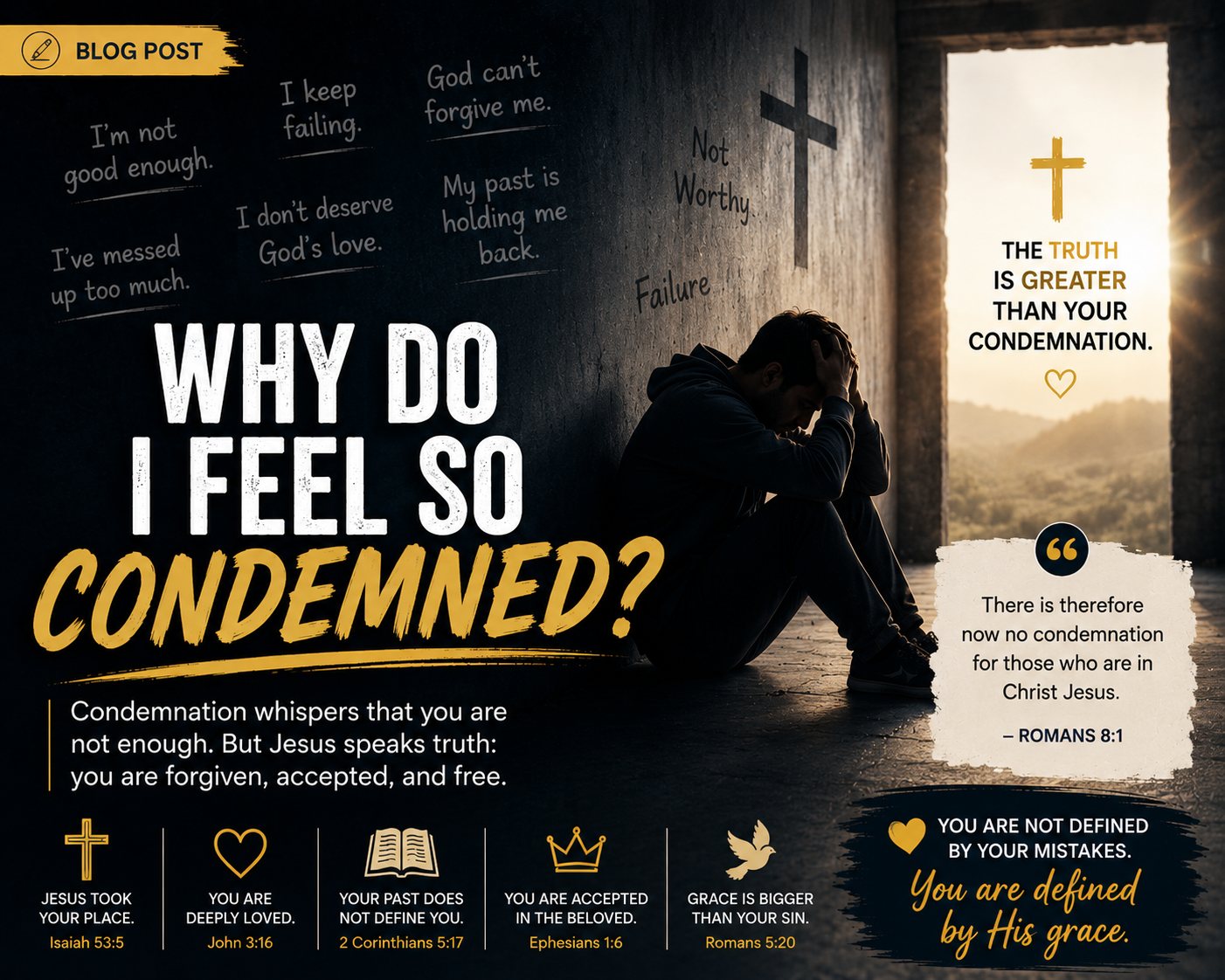
### Why Do I Feel Condemned?
Feeling condemned can be a heavy burden to carry. Many of us have experienced moments when we feel weighed down by guilt, shame, or self-doubt. It’s important to acknowledge these feelings without judgment. You are not alone in this struggle, and there is a way through the pain. God sees you, understands your heart, and desires to lift that burden.
In the Bible, there is a significant distinction between conviction and condemnation. Conviction comes from the Holy Spirit; it is a gentle nudge that prompts us to turn back to God and seek His forgiveness. It leads us to repentance and growth. Condemnation, however, is a tool of the enemy that tells us we are unworthy, unloved, and beyond hope. It pushes us away from God instead of drawing us closer. Understanding this difference can help you navigate your feelings more clearly.
Here are some key verses that can shed light on this topic:
- Romans 8:1 (NIV): “Therefore, there is now no condemnation for those who are in Christ Jesus.”
- 2 Corinthians 5:17 (ESV): “Therefore, if anyone is in Christ, he is a new creation. The old has passed away; behold, the new has come.”
- John 3:17 (NIV): “For God did not send his Son into the world to condemn the world, but to save the world through him.”
Feeling condemned can stem from various reasons. Here are some common causes:
- Past Mistakes: Lingering guilt from past actions can haunt us and lead us to feel unworthy.
- Negative Self-Talk: Our inner critic can be harsh, telling us we’re not good enough or that we will never change.
- Comparison with Others: Looking at others’ lives can lead to feelings of inadequacy, making us feel like we don’t measure up.
- Unresolved Conflict: Strained relationships can create feelings of guilt and shame, especially if we feel responsible for the discord.
- Misunderstanding God’s Nature: Sometimes we view God as a harsh judge instead of a loving Father, leading to fear of His judgment.
- Spiritual Warfare: The enemy seeks to steal our joy and confidence, often using our past or fears to instill feelings of condemnation.
In the midst of these feelings, it is crucial to remember the truth of the Gospel. God loves you deeply and wants you to experience His grace and forgiveness. Jesus came not to condemn, but to save. When you accept Christ, you are a new creation, free from the weight of your past.
Here are some practical steps you can take:
1. Pray for Clarity: Ask God to help you distinguish between conviction and condemnation.
2. Confess and Repent: If there are specific sins or mistakes weighing you down, confess them to God and seek His forgiveness.
3. Meditate on Scripture: Spend time in God’s Word. Let verses like Romans 8:1 remind you of your identity in Christ.
4. Talk to Someone: Share your feelings with a trusted friend, pastor, or counselor who can offer support and encouragement.
5. Practice Self-Compassion: Treat yourself with the same grace that God extends to you. Remember, you are loved and accepted.
Let’s close with a prayer:
---
Dear Heavenly Father,
I come before You feeling heavy with the weight of condemnation. I ask for Your forgiveness for my past mistakes and for the times I have doubted Your love. Help me to discern between conviction that leads to growth and the lies of condemnation that push me away from You. I thank You for the gift of Your Son, Jesus, who saves me from my sins and offers me new life. Fill me with Your peace and remind me of my worth in You. In Jesus' name, I pray, Amen.
---
Remember, you are not defined by your mistakes but by the love and grace of God. He is ready to embrace you and offer you hope.